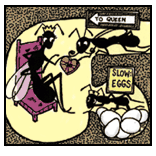
A Family of Ants
[30 Minutes]
Mankind is not alone in living in organized communities, working cooperatively and efficiently, creating a clear division of labor, waging war, and occasionally capturing slaves. The most common of the social insects, the ant, also exhibits these behaviors. Ants and other living things live where they have what they need to survive. By creating an ant colony that will provide food, space, shelter, water, and air that the ants need to live, you will simulate their natural habitat. Create an indoor ant colony. You will not only develop respect for nature but also learn about some of the tiny creatures that share our world.
You'll need:
• shovel • large, clear unbreakable jar (at least quart-size) • sugar cubes, wheat germ, grass seed, dead insects, bread crumbs or chopped meat • a square, 1/2"-piece of sponge • piece of screening • paper or science notebook • pencil • a piece of black construction paper • tape • rubber band
What to do:
- If possible, print out these directions. Read them through together before you begin.
- Togehter with your child, gather everything you’ll need and always remember science safety.
- Go for a nature walk with your child to locate a large, active ant hill. Avoid dangerous breeds of ants!
- Dig up as much of the ant hill as possible, and place it into the jar. Leave a small space at the top.
- Together with your child gather leaves and grass from an area near the hill. Place the pickings into the top of the jar. Let her feed the ants a sugar cube, or sprinkle wheat germ, grass seed, dead insects, bread crumbs, or chopped meat on the soil.
- Let her saturate a 1/2"-square piece of sponge with water and place it on top of the soil in the jar. The sponge should stay moist all of the time.
- Help her cover the jar with a piece of screening and secure it with the rubber band.
- Help her tape black construction paper around the jar to create a dark underground environment.
- After 2 days, have your child take the paper off to view the paths and rooms the ants have built. Remind her that the ant's house will fall in if she shakes the jar.
- Observe the ant colony at least once each day for two or three weeks. Help your child record what she notices, and draw what she sees!
- When you are done observing the ants, together release them to a safe place away from homes and people.
Useful information:
It was fascinating to watch the ants. They all seem to have different jobs. My grandma and I made this ant house and we watched them for awhile. We wrote down the different things they did and then released them back into the ground.
(Madison, age 11)
|