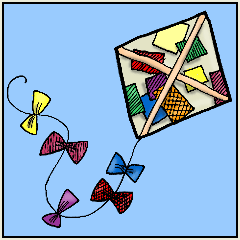
Paper Kites
[30 Minutes]
This kite is made with the basic two stick construction. Two sticks are overlapped, covered with a lightweight material, and a tail is added. Experiment with this kite construction to observe how a kite flies.
You'll need:
• waxed paper • masking tape • liquid laundry starch • color tissue paper cut into squares • yarn • crepe paper streamers
What to do:
- If possible, print out these directions. Read them through before you begin.
- Gather everything you'll need and always remember art and science safety.
- Cut a large piece of waxed paper into a diamond kite shape.
- Place masking tape across and down both centerlines of the back as "braces." (Look at the picture.) The masking tape will strengthen the "kite" and keep the waxed paper from curling.
- Cut out or tear pieces of colorful tissue paper.
- "Paint" the front of your kite with liquid laundry starch.
- Place the pieces of tissue paper on the kite in any design you choose.
- As the kite is drying, make "tails."
- Cut a length of yarn and four or five short crepe paper streamers.
- Tie the streamers around the yarn.
- Fasten the completed tail to the kite bottom with a stapler or make a small hole in the kite and pull the tail through and knot it.
- Choose a windy day and fly your kite.
How to use:
- Experiment with your kite.
- You may wish to try different lengths of tails to observe how the kite flies.
- The tail balances the kite. In a light wind, you will need less of a tail than in a heavy wind.
Useful information:
Bernoulli's principle explains why kites fly. If the kite makes the correct angle with the wind, the front of the kite meets the air with greater pressure than the back of the kite. This creates a lift. When you tug on the kite to make it fly, the kite puts up some resistance to the wind or drag. The shape, the size, and the position of the control line all contribute to creating lift and drag, which influences how well a kite will fly.
|